
TLDR: If you are researching a die cutting operator career labels packaging employers may describe the position as die cutter, converting operator, finishing operator or bindery operator. The job is to turn printed material into an accurate finished shape while monitoring registration, edge quality, waste and production flow. A four-year degree is not usually the main entry requirement; reliability, careful inspection, basic measurement and supervised machine training matter more.
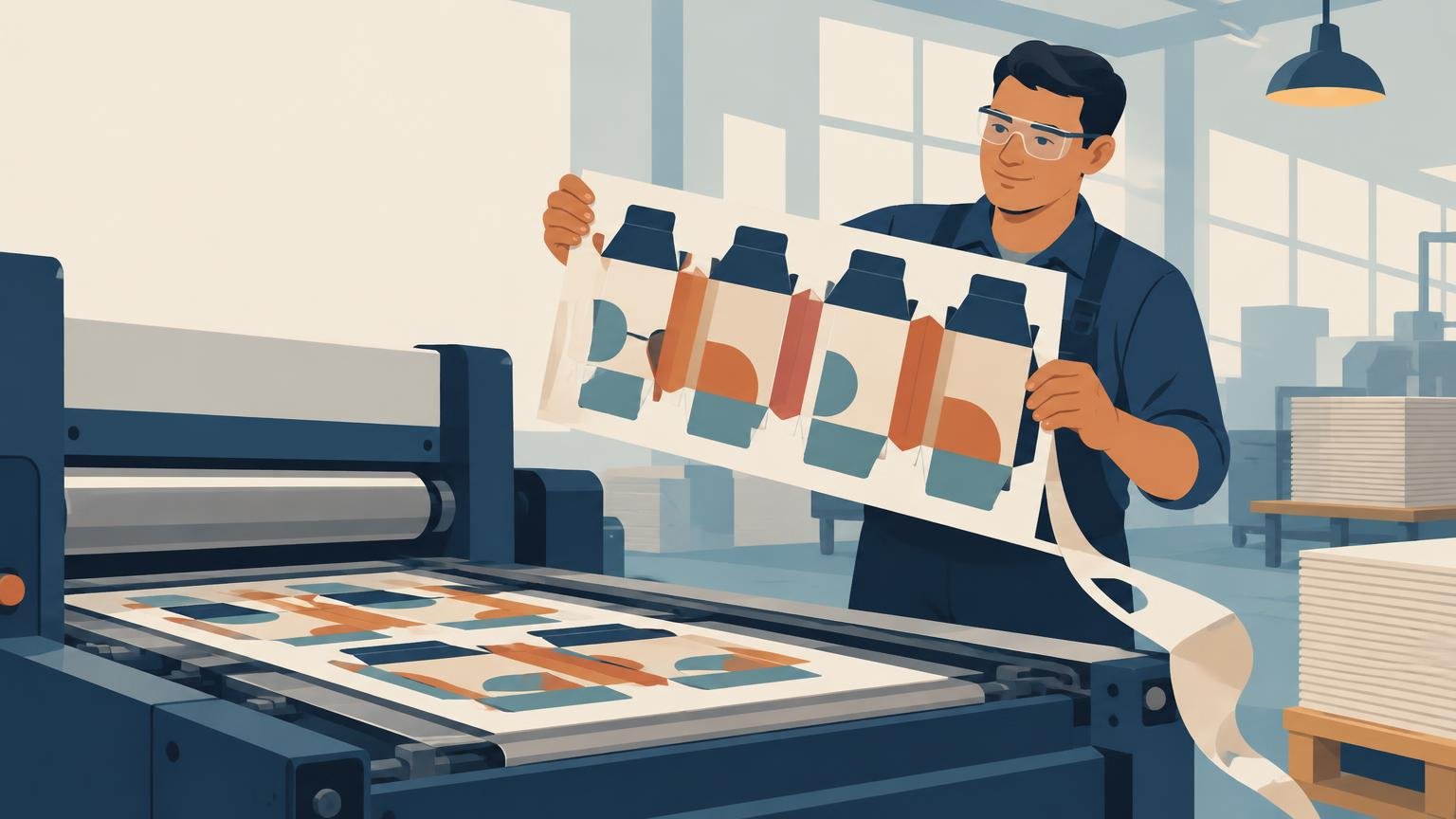
Die cutting is where print becomes shape. A press may put graphics on a roll or sheet, but die cutting helps turn that material into a label, carton blank, insert, display component or other usable piece. The operator’s day is therefore less about making something look creative and more about making thousands of pieces stay consistent.
What a die-cutting operator does during a shift
A typical shift begins with the job information. The operator needs to understand what product is running, which material is involved, what dimensions and quality requirements apply, how completed work should be identified and where it goes next. Depending on the shop, this information may appear on a printed traveler, work order or digital production record.
Once production is underway, the operator watches both the equipment and the output. Common responsibilities include monitoring material movement, inspecting samples, checking dimensions, identifying defects, recording production information and preparing acceptable work for another process or shipment. O*NET lists these kinds of duties for Print Binding and Finishing Workers, the closest broad federal occupational profile for many finishing jobs. It is a useful comparison rather than a perfect match for every die-cutting vacancy. Review the O*NET profile for print binding and finishing workers.
The job also involves communication. If the cut drifts away from the printed image, waste stops separating correctly or the finished pieces no longer meet the work order, a good operator does not quietly let the problem travel downstream. The operator identifies affected output, follows the shop’s hold or reporting process and brings in a lead, quality technician or supervisor when required.
Products and production environments
Die cutting appears in several parts of print and packaging. Label converters may process rolls of pressure-sensitive material into product labels, decals or custom stickers. Folding-carton plants shape printed board that will later be folded and glued. Corrugated packaging operations cut and crease board for boxes, displays or inserts. Commercial-print and bindery departments may produce presentation folders, tags, cards, specialty mail pieces and other shaped products.
Employers may group die cutting under finishing, bindery, converting or packaging production. “Converting” is the broad idea of changing a roll or sheet into a more finished product. That may include cutting, slitting, rewinding, stripping waste, inspecting and preparing material for the next operation. Current label-converting descriptions show that cutting may be combined with waste handling, inspection, slitting and rewinding rather than treated as a completely isolated step.
Job titles do not always tell you which products you will handle. One Tennessee-area employer, for example, describes its die-cutter role around machines that cut and shape cardboard for custom designs. That is a useful example of packaging work, but it is not a universal description of every die-cutting job.
Registration and cut quality are central skills
Registration means the cut is aligned with the printed image and the intended product dimensions. Picture a label with a printed border. If the cutting position shifts, one side of the border may look thick while the other nearly disappears. On a carton, inaccurate cutting or creasing can affect how later sections align and fold. Die cutting contributes to the functional integrity of a finished package, not merely its appearance.
Operators learn to recognize several categories of trouble without treating every symptom as a do-it-yourself repair assignment. They may watch for incomplete separation, rough or damaged edges, inconsistent dimensions, cut-to-print misalignment, unwanted marks, missing pieces or waste that remains attached. The exact tolerances and inspection methods come from the employer’s specifications and customer requirements.
The beginner’s responsibility is straightforward: know what acceptable output looks like, check it at the required intervals, contain questionable material and escalate problems through the approved process. Mechanical curiosity is valuable, but disciplined quality judgment is what prevents a small defect from becoming a large pile of unusable work.
Waste stripping and job flow
Many die-cut products leave unwanted material around the useful shape. In roll-label converting, the surrounding waste is often called the matrix. “Matrix stripping” refers to separating and managing that waste as the converted label material continues through the process. Equipment suppliers use the term when describing integrated label-converting and waste-handling functions.
Waste is also a production clue. An unusual break, poor separation or changing waste pattern may signal that the job needs attention. Operators must keep acceptable product, questionable output and scrap from becoming mixed. They may also record counts or production details according to the shop’s system.
Job flow matters because die cutting is commonly one stage in a longer route. A carton blank may move next to folding and gluing; a label roll may need slitting, rewinding or inspection. If carton production interests you, the next role to compare is folder-gluer and packaging converting work, where shaped blanks become finished cartons.
Flatbed, rotary and digital cutting at a glance
The machine class changes the rhythm of the work, but the operator’s core concerns remain familiar: follow the job information, monitor output, recognize defects and keep material moving safely. Label converters may use rotary, semi-rotary, flatbed and laser or other digital cutting technologies.
| Machine class | High-level description | Common operator focus |
|---|---|---|
| Flatbed cutting | Material is processed against a flat cutting area, often for sheet-fed packaging or commercial-print work. | Sheet condition, alignment, complete cutting and consistent finished pieces. |
| Rotary cutting | Material commonly moves through rotating tooling, making it well suited to continuous roll workflows such as label converting. | Web movement, cut-to-print registration, waste removal, roll quality and steady output. |
| Digital cutting | A computer-controlled process cuts from production data without a conventional physical die for every shape. | Correct job data, material handling, inspection and efficient movement among changing jobs. |
This comparison is career orientation, not operating instruction. Actual controls, approved adjustments, tooling practices and protective systems vary by machine. Learn those only through the employer’s supervised, equipment-specific program.
What the work feels like
Expect production work rather than a desk-centered day. O*NET’s related finishing profile identifies standing, repetitive hand use, accuracy, teamwork and machine-paced activity as relevant work-context factors. Material handling and physical requirements vary by plant, product and level of automation, so the job posting and interview are the right places to verify lifting expectations.
Schedules also vary. Some operations run one daytime shift; others use evening, overnight, rotating or overtime schedules to keep equipment productive. Ask what schedule you are accepting rather than assuming that “first shift” will soon become available.
The mental challenge is sustained attention. An early sample can look excellent and later output can still change. Operators must continue checking the job while meeting a production pace. People who enjoy practical machinery, visible results and clear quality standards may find that satisfying. People who strongly dislike repetition, production noise or long periods on their feet should examine the environment carefully before accepting an offer.
How to start a die cutting operator career in labels or packaging
There is no single entry route. O*NET places the related Print Binding and Finishing Workers occupation in Job Zone 1–2, which indicates that employer-based preparation is common and a bachelor’s degree is not generally the standard route. Individual employers can still set their own education and experience requirements.
A beginner can search beyond the exact title “die-cutting operator.” Useful search terms include:
- Die cutter trainee or die-cutting assistant
- Finishing operator or print-finishing technician
- Converting operator or label-finishing operator
- Bindery operator or bindery helper
- Packaging machine operator
- Production associate in labels, cartons or corrugated packaging
Before applying, build a small readiness checklist. Practice reading a ruler accurately, following a written specification and comparing a sample against simple quality criteria. Be ready to explain how you would respond if output changed: pause or contain work as authorized, label questionable material, report what you observed and follow the supervisor’s direction. Employers also look for attendance, safe work habits and the ability to stay attentive during repetitive production.
Do not present yourself as trained to adjust or service equipment you have never used. A stronger interview statement is: “I understand that registration, clean edges and accurate counts matter, and I am ready to learn your machine and procedures under supervision.”
Safety training is part of job readiness
Normal production and equipment servicing are not interchangeable. OSHA distinguishes production activity from servicing and maintenance, and hazardous-energy controls depend on the task, equipment and employer procedures. OSHA’s printing-industry guidance on hazardous energy provides authoritative context, but your employer’s training and machine-specific rules govern your work.
Never improvise around guards, reach into equipment or attempt a jam-clearing, tooling or repair task because it looks simple. Stop and escalate according to your training. Knowing the boundary of your authorization is a professional skill, not a lack of initiative.
How operators advance
Advancement usually starts with trust. Can you run routine assigned work under the required supervision, keep records accurate, recognize quality changes and communicate before a problem grows? From there, an operator may learn more products, materials, inspection requirements and job-flow responsibilities.
A Tennessee Jobs4TN bindery posting used responsibilities such as interpreting work orders, maintaining dimensional accuracy, monitoring output quality and directing or mentoring others. One posting does not define the whole occupation, but it shows how technical consistency and communication can become leadership duties.
Possible next steps include senior operator, finishing or converting lead, quality technician, production coordinator or supervisor. Some workers move toward adjacent fabrication roles; for a comparison, see what a sign fabricator does. The best preparation for leadership is not simply running faster. It is understanding job flow, documenting problems clearly, helping coworkers follow standards and knowing when another department needs to be involved.
Questions to ask before accepting a job
- What products and materials would I work with most often?
- Is this role sheet-fed, roll-fed, digital or a mix?
- How long is supervised training, and how is readiness evaluated?
- Which measuring and inspection tasks belong to the operator?
- What are the lifting, standing, noise and schedule expectations?
- How are questionable products identified and contained?
- Which tasks require a lead, maintenance employee or other authorized person?
- What skills distinguish a trainee from a senior operator or converting lead?
Tennessee job seekers can also use the state’s career-exploration resources and Jobs4TN tools to investigate local openings and related career paths. Explore Tennessee career and job-search resources.
Your practical next step
Search local openings using several related titles, then compare the products, shift, physical demands and training described in each posting. Apply when you can show careful work, basic measurement, reliable attendance and respect for supervised procedures—even if your previous job used different equipment.
Die cutting is skilled quality-and-flow work. The operator helps make sure the printed piece becomes the right shape, stays aligned and reaches the next production step in usable condition. If that combination of machinery, visual inspection and practical problem-solving sounds appealing, an operator-trainee, finishing or packaging-production role is a sensible place to begin.
References
- 51-5113.00 – Print Binding and Finishing Workers
- ABG Delivers New Levels of Efficiency for Label Converters with Integrated Nonstop Unwind Launch – ABG
- Cut To Size Labels & Custom Die Cut Labeling | TLP
- Careers | Volunteer Packaging Group LLC
- Die-Cutting | TPC Packaging
- 51-5113.00 – Print Binding and Finishing Workers
- Printing Industry: Lock Out/Tag Out and the essential elements of the inch-safe-service technique | Occupational Safety and Health Administration
- JOBS4TN.GOV – Job Details
- Discover New Career Paths